
Our services
From consulting and strategy development to implementation and support, our comprehensive services can help your business thrive.
Enterprise Architecture & Business analysis
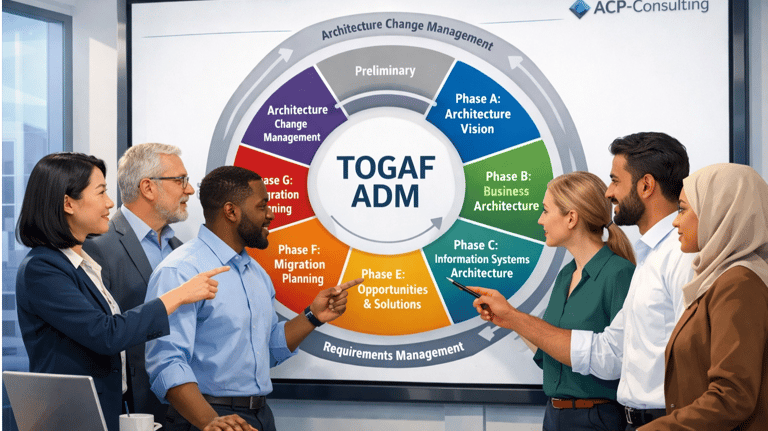
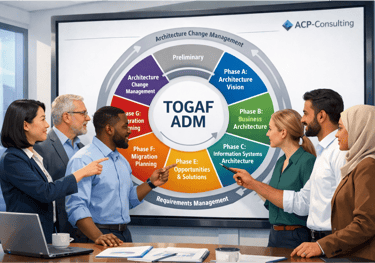
Architecture Development Method (ADM) Lifecycle
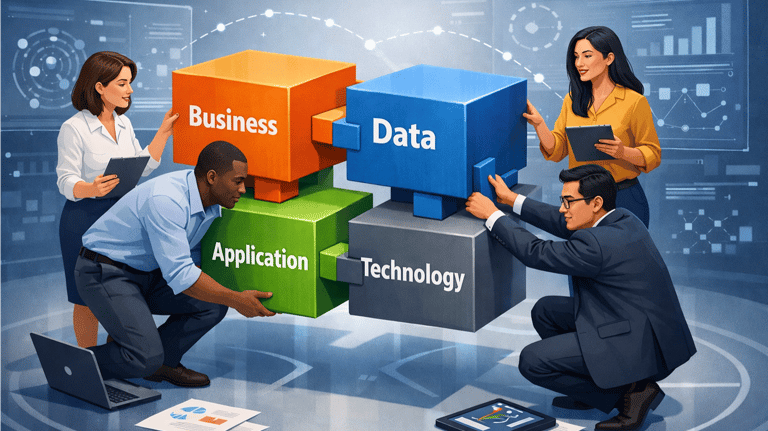
The Architecture Development Method (ADM) is the core of TOGAF and provides a step‑by‑step, repeatable process to design and govern your Enterprise Architecture from vision to implementation. It structures work into phases from initial preparation, through Business, Data/Application and Technology Architecture, to migration, implementation governance and continuous change management.
ACP‑Consulting uses the ADM lifecycle to guide clients from a clear Architecture Vision through to measurable delivery. We start by defining scope and stakeholders, then model business capabilities, information flows, applications and technology platforms in a coherent target architecture. Based on this, we identify opportunities and solutions, shape migration roadmaps, and put in place governance mechanisms that keep projects aligned with business requirements over time. This disciplined, iterative approach reduces complexity, improves transparency of decisions and ensures that every architecture initiative is firmly anchored in verified business needs.
Enterprise Continuum and Architecture Repository
TOGAF introduces the Enterprise Continuum and Architecture Repository to structure all architecture building blocks and solution assets, from generic industry patterns to organization‑specific designs. This provides a managed environment where principles, models, standards and reusable components are classified and evolve in a controlled way.
ACP‑Consulting helps you establish and organize your Architecture Repository so that proven solutions become reusable assets instead of one‑off project artefacts. We classify architectures along the Enterprise Continuum, from reference models and industry frameworks to your tailored business, information and technology architectures. This means future projects can build on an existing catalogue of patterns, standards and services, accelerating delivery, improving consistency and making compliance and risk management easier to demonstrate.


Governance, Principles and Alignment with Business Strategy
TOGAF emphasizes strong architecture governance, clear principles and a direct line of sight from business strategy to IT decisions. Architecture boards, standards, and compliance processes are used to ensure that architectural work delivers business value and that change is managed in a controlled, transparent way.
ACP‑Consulting designs governance structures, decision processes and architecture principles that fit your organization’s culture and maturity. We define how initiatives are evaluated, how exceptions are handled, and how architecture compliance is checked during projects, always in connection with your strategic objectives and risk appetite. The result is an Enterprise Architecture capability that improves stakeholder visibility, strengthens investment decisions and supports cybersecurity, data and regulatory requirements across your portfolio.
Strategic Analysis and Enterprise Change
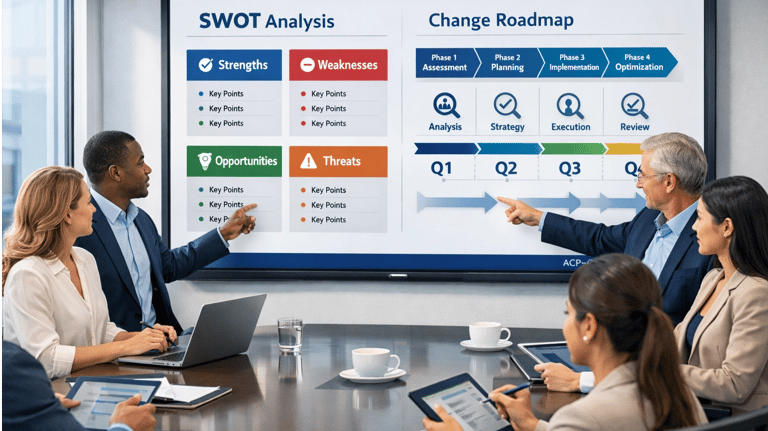
Our Strategic Analysis service ensures that your IT initiatives are not just technically sound but are fundamentally aligned with your organization's long-term goals. This is the foundational step where we define the business need, assess the current state, and articulate the future state to guide all subsequent IT efforts.
General View of the Methodology
This methodology involves a deep dive into the organizational context, identifying key problems, opportunities, and constraints. We work with executive leadership to define the business case, determine the scope of the solution, and establish the measurable objectives that will define success. The focus is on understanding the "why" before moving to the "what" and "how" of the solution.
Elicitation and Collaboration: Unlocking Stakeholder Needs
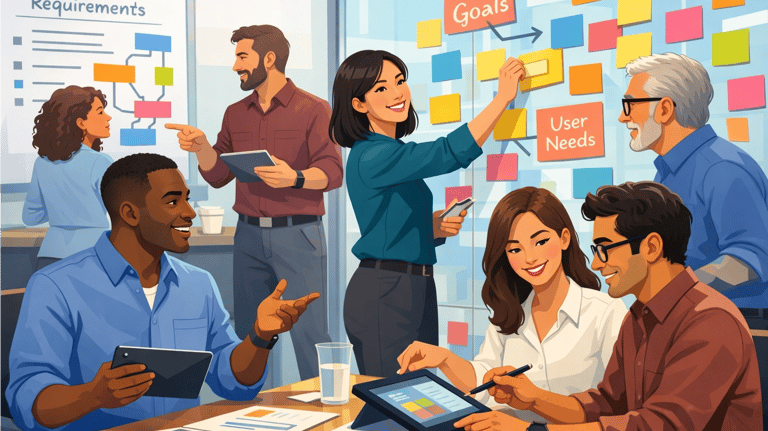
The success of any IT project hinges on accurately capturing the true needs of the business. Our Elicitation and Collaboration service focuses on the critical interaction with stakeholders to discover, confirm, and communicate information effectively, ensuring no requirement is missed or misunderstood .
General View of the Methodology
We employ a variety of proven techniques—from workshops and interviews to observation and prototyping—to draw out requirements from diverse stakeholder groups. Our methodology emphasizes active listening, conflict resolution, and clear documentation to build a shared understanding between business users and the technical team. This collaborative approach transforms vague ideas into precise, actionable requirements.
Requirements Life Cycle Management: Governance and Traceability
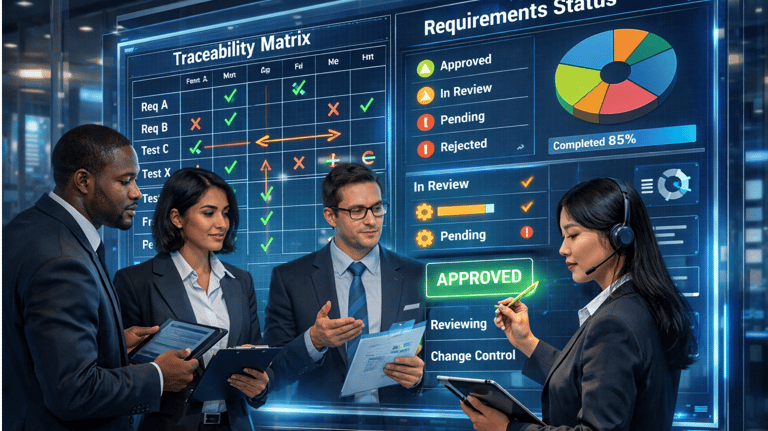
In complex IT environments, requirements are constantly changing. Our Requirements Life Cycle Management service provides the necessary governance and structure to manage requirements from their inception to their retirement, ensuring that the final solution meets the original business need .
General View of the Methodology
This methodology establishes a robust framework for tracing, maintaining, prioritizing, and approving requirements. We ensure that every requirement is linked to a business objective and that its status is clearly tracked throughout the project lifecycle. This discipline is crucial for managing scope creep, demonstrating compliance, and validating that the implemented solution delivers the intended value.